
“Not all who wander are lost—but some may be bitten.”
As the climate warms and ecosystems shift, a quiet threat is creeping through our forests, parks, and even backyards: Lyme disease. Once confined to specific regions, this tick-borne illness is now on the rise globally, and its symptoms are as elusive as the tiny arachnids that carry it.
🌍 Climate Change and the Tick Boom
Ticks thrive in warm, humid environments. As global temperatures rise, their habitats expand—and so does the risk of Lyme disease. These blood-sucking parasites are second only to mosquitoes in transmitting diseases to humans. But unlike a mosquito bite, a tick’s presence often goes unnoticed.
Why? Because ticks secrete anti-inflammatory compounds that numb the skin, allowing them to feed undetected. In that silent exchange, they may pass on a host of pathogens—most notably Borrelia burgdorferi, the bacteria behind Lyme disease.
🧬 The Many Faces of Lyme
Originally identified in Lyme, Connecticut in 1975, the disease first appeared as a mysterious form of arthritis. But Lyme is far more complex. It’s a shape-shifting illness with symptoms that mimic everything from chronic fatigue to neurological disorders.
Dr. Jack Lambert, infectious disease expert and founder of the Lyme Resource Centre, explains:
“It’s a type of bacteria that penetrates every tissue in the body.”
That’s why early detection is crucial. Left untreated, Lyme can evolve into a debilitating condition affecting joints, the nervous system, and even mental clarity.
🩺 Why Diagnosis Is So Difficult
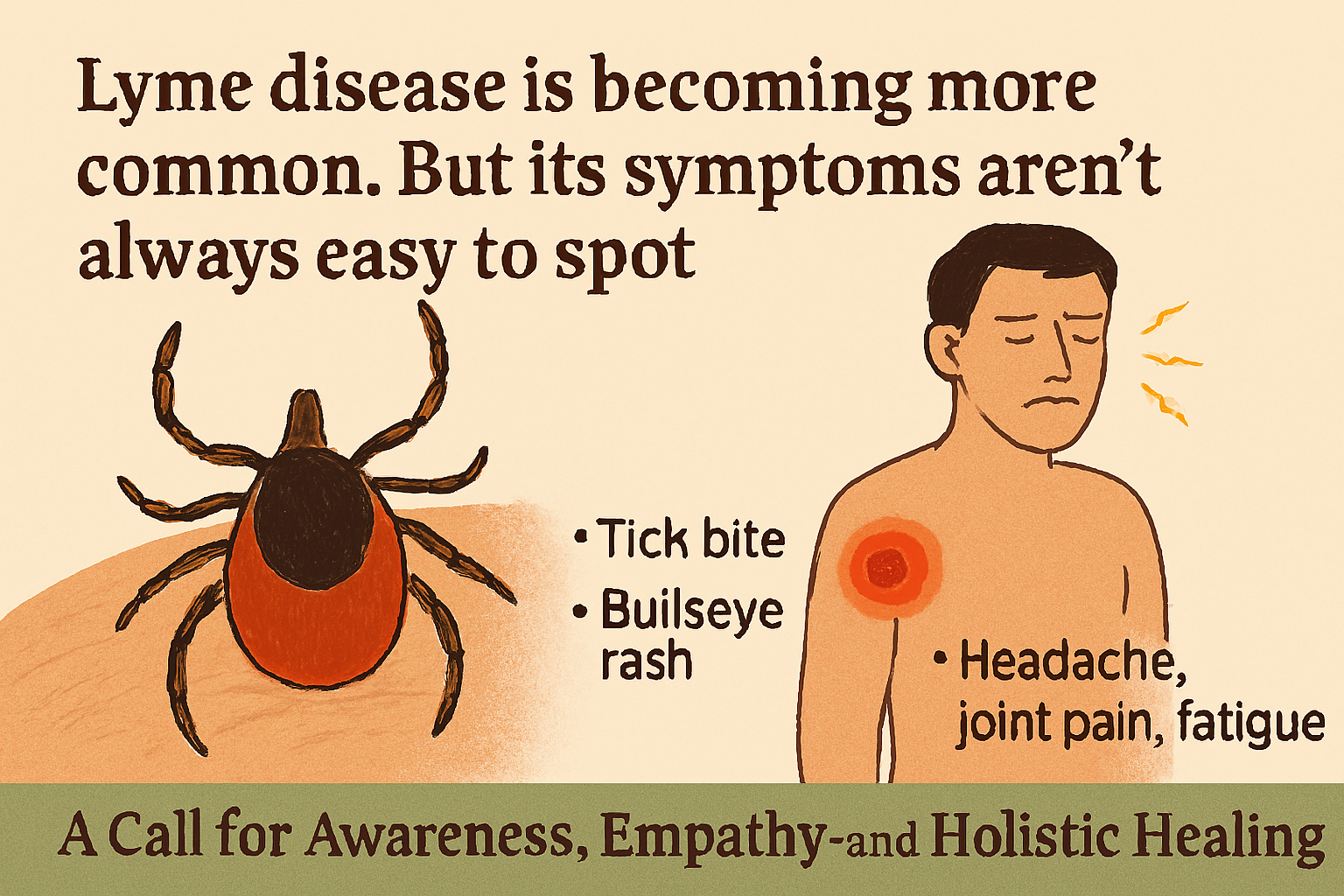
Many physicians struggle to recognize Lyme disease. Its symptoms—headaches, joint pain, brain fog, rashes—can resemble other conditions. And not everyone gets the telltale “bullseye” rash. Without clear markers, misdiagnosis is common, leading to delayed treatment and prolonged suffering.
🌿 What You Can Do
Whether you’re hiking in native bush or gardening at home, here’s how to protect yourself:
- Dress mindfully: Wear long sleeves and pants tucked into socks.
- Use natural repellents: Lemon eucalyptus oil is a gentle, effective option.
- Check your skin: After outdoor activities, inspect your body—especially warm, hidden areas like behind knees or underarms.
- Remove ticks safely: Use fine-tipped tweezers and avoid squeezing the body.
- Trust your intuition: If symptoms linger after a bite, seek medical advice—even if tests are inconclusive.
💚 A Call for Awareness, Empathy—and Holistic Healing
Lyme disease is more than a medical issue—it’s a reflection of our changing relationship with nature. As ecosystems shift, so do the risks. But with awareness, compassion, and timely action, we can protect ourselves and others.
And healing doesn’t end with antibiotics. Many who’ve faced Lyme’s lingering symptoms—fatigue, brain fog, joint pain—find solace in holistic approaches that nourish the body and calm the mind. Ayurveda, the ancient Indian science of life, offers gentle, natural ways to support recovery and restore balance.
From anti-inflammatory herbs like Guduchi to grounding rituals like Abhyanga (self-massage), these practices don’t replace medical care—but they can walk beside it, offering comfort and clarity.
🪷 In our next post, we’ll explore how Ayurvedic wisdom can support the journey of healing after Lyme—bringing together science, soul, and the rhythms of nature.
Let’s walk gently, live mindfully, and listen to the quiet signals our bodies—and our planet—are sending.




Leave a Comment