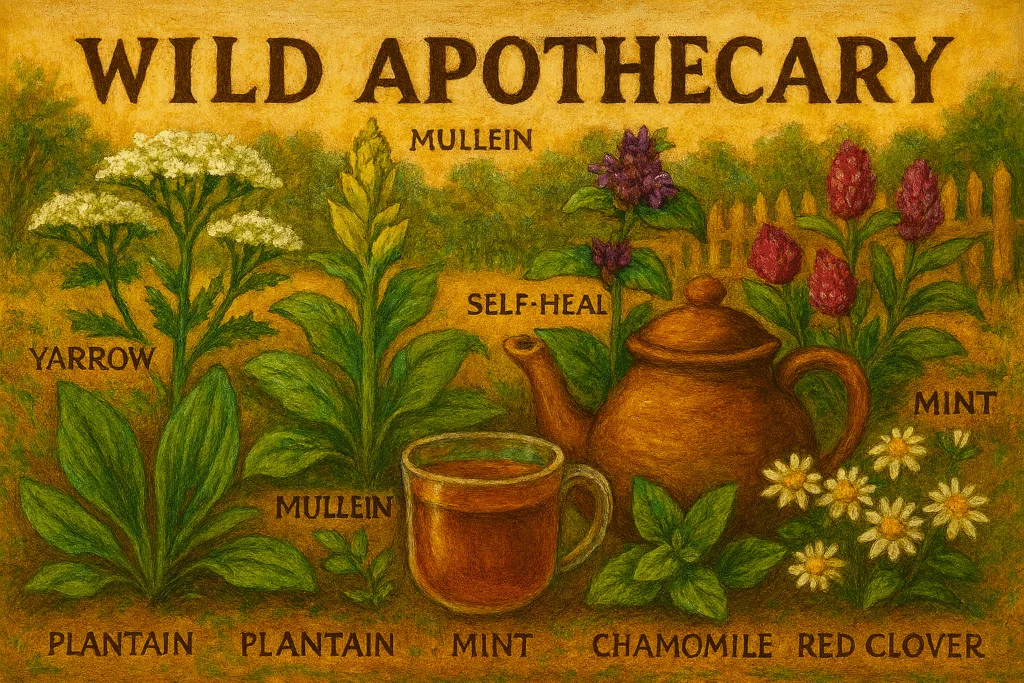
Imagine stepping outside and finding a pharmacy at your feet. Not in bottles or boxes—but in leaves, petals, and roots. The wild apothecary is real. It is quietly growing in your backyard, along trails, and in hidden corners of the garden.
This guide introduces seven common plants. They provide gentle and effective support for everyday problems, like cuts, colds, stress, and digestion. These herbs are accessible, time-tested, and deeply healing.
Let’s meet your backyard medicine cabinet.
🌼 Why Use Wild Plants for Healing?
Wild plants:
- Grow naturally and adapt to local conditions
- Are often more potent than cultivated varieties
- Carry ancestral wisdom and ecological resilience
- Offer holistic support—physical, emotional, and spiritual
Using them is an act of empowerment. It’s about reclaiming your relationship with the land and your own well-being.
🌿 1. Yarrow (Achillea millefolium)
Ailments: Cuts, scrapes, bruises, fevers
- How it heals: Yarrow is antiseptic, anti-inflammatory, and styptic (stops bleeding).
- How to use: Crush fresh leaves into a poultice for wounds. Brew as tea for fever or menstrual cramps.
- Bonus: It’s also a pollinator magnet and soil healer.
🌿 2. Plantain (Plantago major)
Ailments: Insect bites, stings, skin irritation, digestive issues
- How it heals: Plantain draws out toxins, soothes inflammation, and supports gut health.
- How to use: Chew a leaf and apply to bites or stings. Make an infused oil for skin. Brew tea for digestion.
- Bonus: It grows almost everywhere—sidewalk cracks, lawns, trails.
🌿 3. Self-Heal (Prunella vulgaris)
Ailments: Sore throat, minor cuts, immune support
- How it heals: Antiviral, antimicrobial, and wound-healing.
- How to use: Make a tea or tincture for immune support. Use fresh leaves on cuts or scrapes.
- Bonus: Its purple flowers attract bees and butterflies.
🌿 4. Mullein (Verbascum thapsus)
Ailments: Coughs, congestion, earaches
- How it heals: Mullein soothes the respiratory tract and reduces inflammation.
- How to use: Dry leaves for tea. Infuse flowers in oil for earaches.
- Bonus: Its tall, fuzzy stalks are striking and easy to spot.
🌿 5. Red Clover (Trifolium pratense)
Ailments: Hormonal imbalance, skin issues, detoxification
- How it heals: Red clover supports lymphatic flow and hormonal balance.
- How to use: Brew as tea or infuse in vinegar. Use in skin salves.
- Bonus: It’s a favorite of bumblebees and a nitrogen fixer for soil.
🌿 6. Chamomile (Matricaria chamomilla)
Ailments: Anxiety, insomnia, digestive upset
- How it heals: Chamomile calms the nervous system and soothes the gut.
- How to use: Brew tea from dried flowers. Use in bath blends or facial steams.
- Bonus: Its gentle scent and daisy-like flowers bring peace to any garden.
🌿 7. Mint (Mentha spp.)
Ailments: Nausea, indigestion, headaches
- How it heals: Mint cools, calms, and clears.
- How to use: Brew tea, chew fresh leaves, or apply as a compress.
- Bonus: It spreads easily and smells divine.
🍵 Recipe: Mullein & Chamomile Lung Tea
Ingredients:
- 1 tbsp dried mullein leaves
- 1 tbsp dried chamomile flowers
- 2 cups hot water
- Optional: honey or lemon
Instructions:
- Steep herbs in hot water for 10–15 minutes.
- Strain through a fine mesh (mullein has tiny hairs).
- Sip slowly to soothe lungs and nerves.
🧘♀️ Ritual: The Backyard Medicine Walk
Take a slow walk through your garden or local trail. Notice what’s growing. Touch the leaves. Smell the flowers. Ask the plants what they offer. This simple ritual builds relationship—and reveals the medicine waiting to be remembered.
Are these backyard plants safe to use medicinally?
Yes, most of the plants featured—like yarrow, plantain, chamomile, and mint—are considered safe when properly identified and prepared. However, always:
Consult a healthcare provider if pregnant, nursing, or taking medications
Use correct dosage and preparation methods
Avoid harvesting from polluted areas (e.g., roadsides or sprayed lawns)
What ailments can these plants help with?
These herbs support a wide range of everyday issues:
- Yarrow: Cuts, bruises, fevers
- Plantain: Insect bites, skin irritation, digestion
- Self-Heal: Sore throat, immune support
- Mullein: Coughs, congestion, earaches
- Red Clover: Hormonal balance, detoxification
- Chamomile: Anxiety, insomnia, digestive upset
- Mint: Nausea, headaches, indigestion
They offer gentle, holistic support for common conditions.
How do I prepare these herbs for use?
Each plant has unique preparation methods:
- Tea: Chamomile, mullein, mint, red clover
- Poultice: Yarrow, plantain, self-heal
- Infused oil: Plantain, mullein flowers
- Tincture: Self-heal, red clover
- Compress or steam: Mint, chamomile
Start with small amounts and observe how your body responds.
Can I grow these plants at home?
Absolutely! Many of these herbs are easy to grow:
- Mint and chamomile thrive in containers
- Yarrow and plantain grow well in lawns and garden beds
- Mullein and self-heal prefer sunny spots
- Red clover improves soil and attracts pollinators
You can create a healing garden with minimal space and effort.
How do I identify these plants correctly?
Use a trusted field guide or plant ID app. Key tips:
- Yarrow: Fern-like leaves, flat white or pink flower clusters
- Plantain: Broad leaves with parallel veins, low-growing rosette
- Mullein: Tall stalk, fuzzy leaves, yellow flowers
- Chamomile: Small daisy-like flowers with a sweet scent
- Mint: Square stems, aromatic leaves
- Self-Heal: Purple flower spikes, low-growing
- Red Clover: Pinkish-purple round flowers, trifoliate leaves
If unsure, consult a local herbalist or foraging group.
Can these herbs support emotional well-being?
Yes! Many of these plants have calming and uplifting properties:
- Chamomile: Eases anxiety and promotes sleep
- Mint: Refreshes and clears the mind
- Red Clover: Supports hormonal balance and emotional grounding
- Self-Heal: Symbolically and energetically linked to resilience
Using herbs in teas, baths, or rituals can support emotional healing.
Is it okay to forage these plants in the wild?
Yes, but forage responsibly:
- Identify plants with certainty
- Harvest from clean, unsprayed areas
- Take only what you need
- Leave enough for pollinators and plant regeneration
Foraging is a beautiful way to reconnect with nature—just be respectful and ethical.