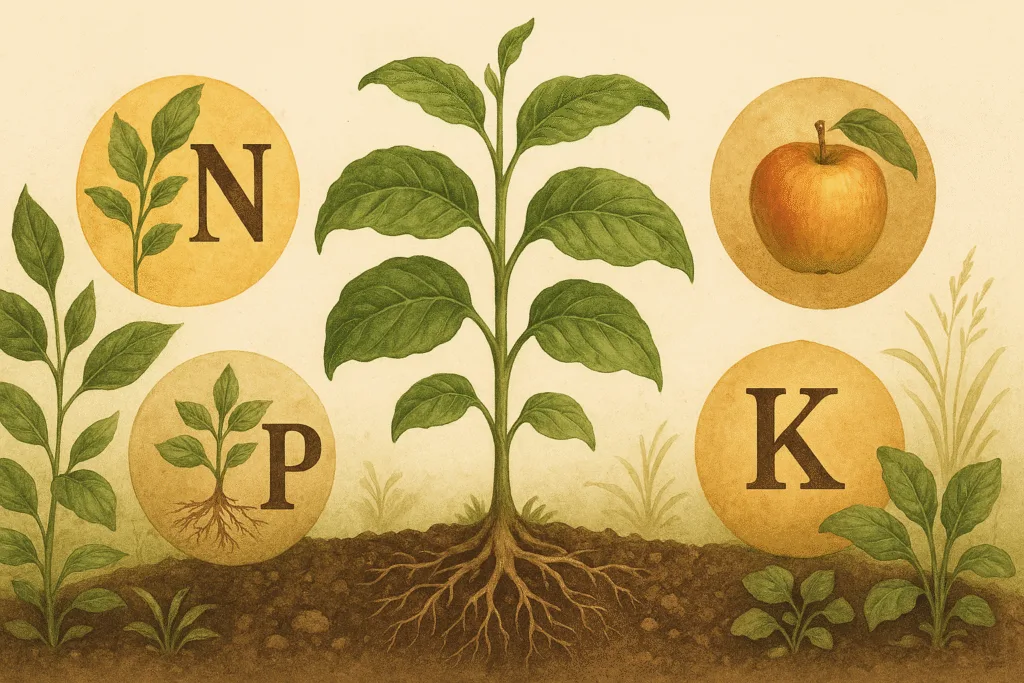
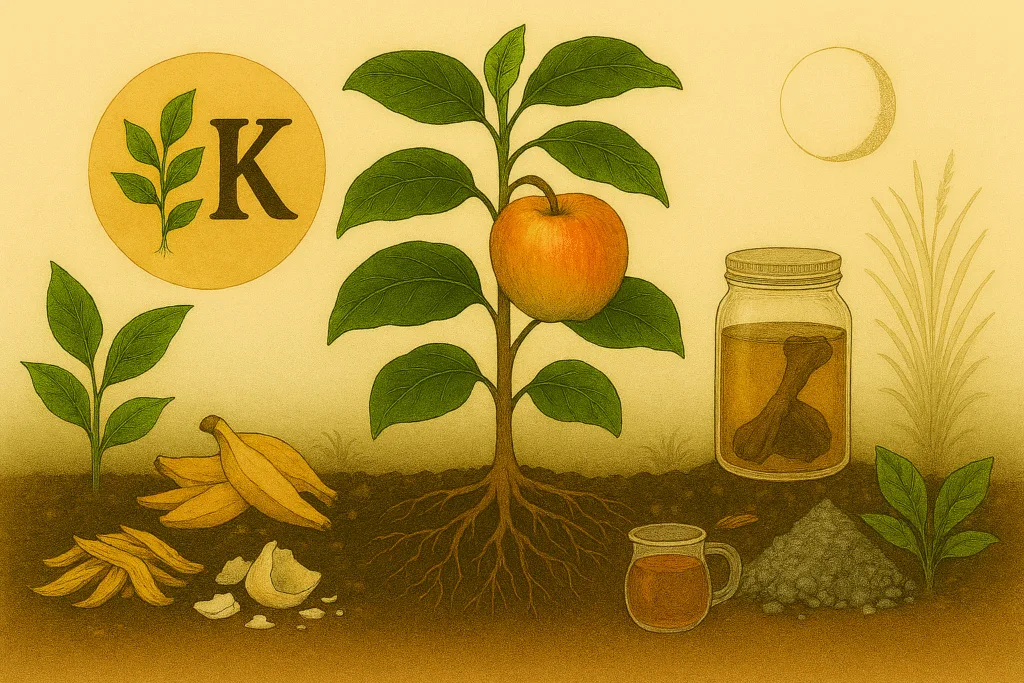
Potassium is the garden’s guardian. It doesn’t build leaves or roots—it fortifies. It strengthens cell walls, regulates water, and helps plants resist disease and stress. It’s the nutrient of sweetness, of flavor, of fruit that nourishes body and soul. When potassium is low, plants falter. But with care, they thrive.
🌱 What Potassium Does
- Regulates water uptake and transpiration
- Strengthens stems and cell walls
- Enhances fruit quality, flavor, and shelf life
- Boosts disease resistance and stress tolerance
🍎 Deficiency Symptoms
- Brown or scorched leaf edges
- Weak stems and poor posture
- Diminished fruit flavor or yield
- Increased susceptibility to pests and drought
🏡 Home-Based Potassium Remedies
1. Banana Peels
- Bury directly in soil or blend into compost tea
- Use around fruiting plants like tomatoes, peppers, and squash
- Combine with molasses for a potassium-rich tonic
2. Wood Ash (sparingly)
- High in potassium and trace minerals
- Sprinkle lightly around fruit trees or mix into compost
- Avoid overuse—can raise soil pH
3. Molasses Water
- Mix 1 tablespoon of unsulfured molasses into 1 liter of water
- Feed soil microbes and add potassium
- Use as a foliar spray or soil drench
4. Composted Seaweed
- Rich in potassium, magnesium, and micronutrients
- Rinse to remove salt, then compost or brew into a tea
- Ideal for coastal gardeners or those with access to clean seaweed
🌿 Organic Store-Bought Boosters
- Greensand: Slow-release and mineral-rich
- Kelp meal: Oceanic nourishment for soil and spirit
- Langbeinite: A balanced source of potassium, magnesium, and sulfur
🌱 DIY NPK Soil Tester
🌕 Ritual Tip
Feed potassium during the full moon, when plants are most receptive to resilience and sweetness. Offer a small bowl of fruit to the garden as a gesture of reciprocity. Let your harvest be a celebration.