In the quiet corners of your kitchen or garden, something amazing is growing. Tiny greens are full of life, flavor, and healing. Microgreens and sprouts are small, but they hold ancient knowledge. They are packed with nutrients and have health benefits that can match full-grown vegetables.
Across cultures, these young plants have been used for nourishment, medicine, and ritual. Today, they are making a comeback. They are not just trendy garnishes. They are also strong allies in healing ourselves and the planet.
This blog looks at how these greens help digestion, boost immunity, and improve emotional health. They also connect us to old food traditions. Whether you grow them on a windowsill or find wild sprouts outside, you are growing more than food. You are building resilience.
🌿 What Are Microgreens and Sprouts?
Though often confused, they’re distinct:
| Type | Description | Harvest Time | Edible Parts |
|---|---|---|---|
| Sprouts | Germinated seeds grown in water or jars | 2–4 days | Entire plant (seed, root, shoot) |
| Microgreens | Young greens grown in soil or trays | 7–21 days | Stem and leaves (not roots) |
Sprouts are the first stage of growth, while microgreens are slightly older and more flavorful. Both are packed with enzymes, antioxidants, and nutrients—making them ideal for healing and regeneration.
🌾 Why They Matter: Healing from the Inside Out
These tiny greens are:
- 🧬 Nutrient-dense: Studies show microgreens can contain up to 40x more nutrients than mature plants. They’re rich in vitamins A, C, E, K, and minerals like iron, magnesium, and zinc.
- 🌿 Therapeutic: Contain antioxidants, enzymes, and phytonutrients that reduce inflammation, support detoxification, and balance hormones.
- 🧘♀️ Emotionally grounding: Growing and eating them fosters mindfulness, joy, and connection to ancestral rhythms.
- 🌍 Accessible: Easy to grow at home with minimal space, light, or equipment. Perfect for urban dwellers and small-space gardeners.
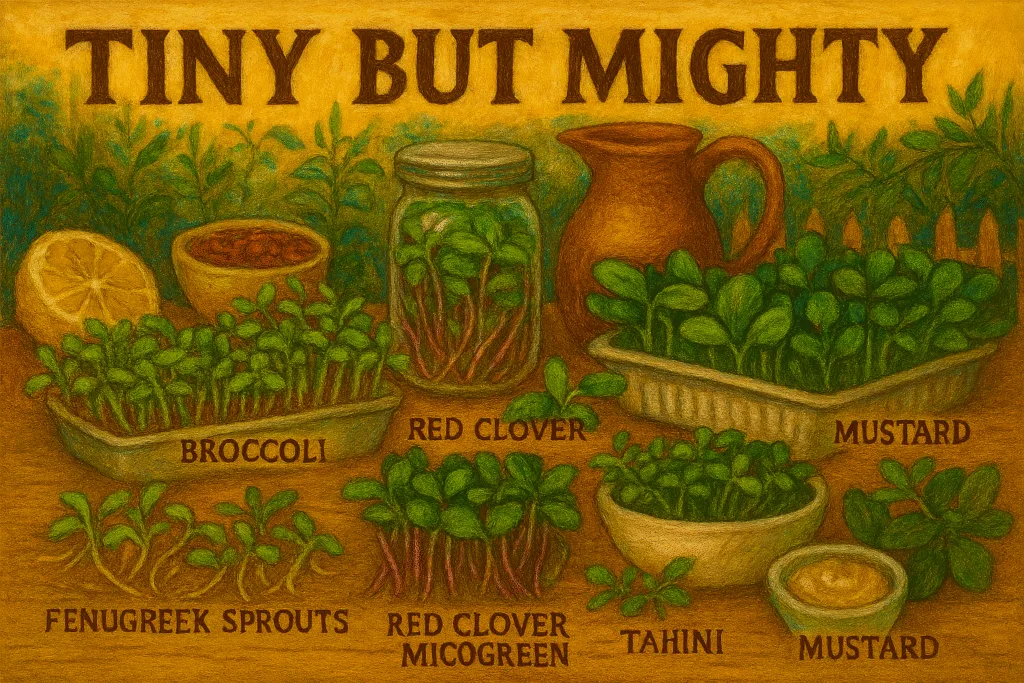
🌱 1. Fenugreek Sprouts
Healing Uses: Digestion, blood sugar balance, hormonal support
- Ancestral roots: Used in Ayurvedic and Middle Eastern traditions for centuries. Fenugreek was considered a sacred seed for women’s health and digestive fire (agni).
- Flavor: Earthy, slightly bitter
- How to use: Add to salads, soups, or blend into smoothies. Can also be dried and powdered for spice blends.
- Growing tip: Soak seeds for 6–8 hours, rinse twice daily, harvest in 3–4 days.
- Keywords: fenugreek sprouts benefits, sprouts for digestion
🌱 2. Broccoli Microgreens
Healing Uses: Cancer prevention, liver detox, immune support
- Ancestral roots: Brassica family used in Chinese and European herbalism for detoxification and lung health.
- Flavor: Mild, peppery
- How to use: Top on sandwiches, stir into grain bowls, or blend into green juices.
- Growing tip: Use organic broccoli seeds, sow densely in trays, mist daily, harvest in 7–10 days.
- Keywords: broccoli microgreens nutrition, detox microgreens
🌱 3. Red Clover Sprouts
Healing Uses: Hormonal balance, skin health, lymphatic support
- Ancestral roots: Used in Western herbalism and Indigenous medicine for cleansing and fertility.
- Flavor: Mild and sweet
- How to use: Add to wraps, salads, or infuse in vinegar for skin tonics.
- Growing tip: Soak seeds overnight, rinse twice daily, harvest in 4–5 days.
- Keywords: red clover sprouts, sprouts for hormonal health
🌱 4. Sunflower Microgreens
Healing Uses: Energy boost, mood support, protein source
- Ancestral roots: Native American food and ceremonial plant. Sunflower seeds were ground into flour and used in rituals.
- Flavor: Nutty, crunchy
- How to use: Eat fresh, blend into pesto, or toss with lemon and olive oil.
- Growing tip: Use hulled seeds, soak overnight, plant in trays, harvest in 7–10 days.
- Keywords: sunflower microgreens protein, microgreens for energy
🌱 5. Radish Sprouts
Healing Uses: Circulation, respiratory health, metabolism
- Ancestral roots: Used in Asian and Ayurvedic traditions to stimulate digestion and clear stagnation.
- Flavor: Spicy, crisp
- How to use: Add to tacos, noodle bowls, or herbal wraps.
- Growing tip: Soak seeds for 4 hours, rinse twice daily, harvest in 3–4 days.
- Keywords: radish sprouts benefits, spicy microgreens
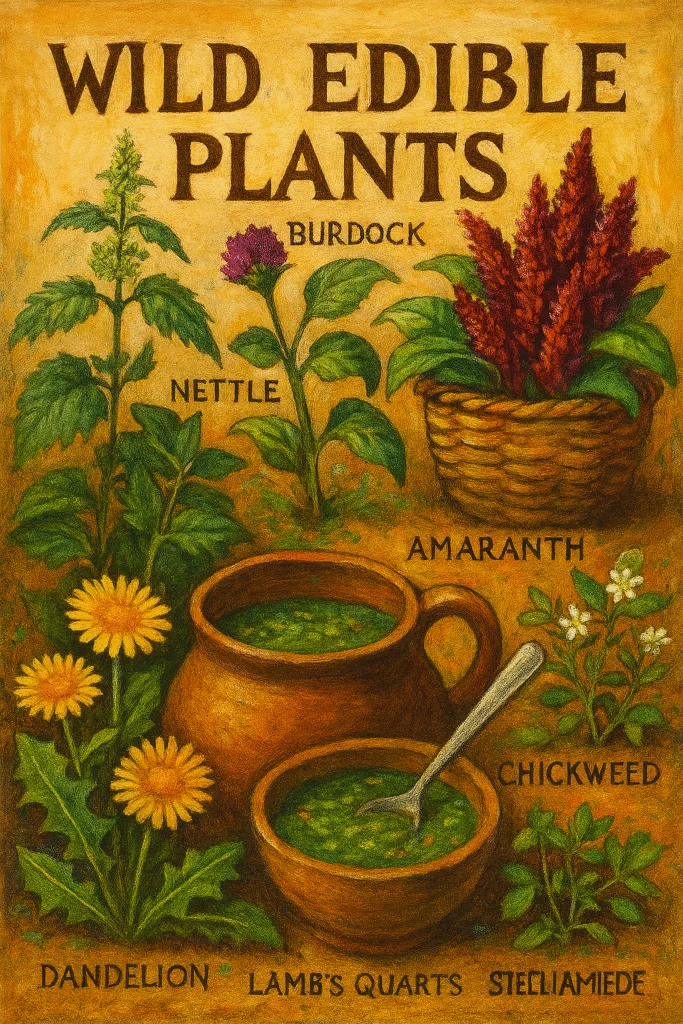
🌱 6. Wild Chickweed Sprouts
Healing Uses: Skin healing, mineral replenishment, cooling inflammation
- Ancestral roots: European and Appalachian spring tonic. Chickweed was used to soothe skin and cool fevers.
- Flavor: Mild, grassy
- How to use: Eat raw in salads, infuse in oil for salves, or brew as tea.
- Growing tip: Forage young chickweed in early spring or sow seeds in cool, moist soil.
- Keywords: chickweed microgreens, wild edible sprouts
🌱 7. Mustard Microgreens
Healing Uses: Circulation, sinus clearing, digestive fire
- Ancestral roots: Used in Ayurvedic and African traditions to stimulate heat and movement in the body.
- Flavor: Bold, spicy
- How to use: Add to sandwiches, soups, or herbal broths.
- Growing tip: Sow seeds in trays, mist daily, harvest in 5–7 days.
- Keywords: mustard microgreens health benefits, spicy sprouts
🍲 Recipe: Ancestral Microgreen Bowl
This bowl blends ancient flavors with modern nutrition.
Ingredients:
- 1 cup cooked quinoa
- ½ cup sunflower microgreens
- ¼ cup radish sprouts
- ¼ cup red clover sprouts
- 1 tbsp tahini
- 1 tsp lemon juice
- Salt and pepper to taste
- Optional: chopped dates, toasted seeds, or goat cheese
Instructions:
- Toss microgreens and sprouts with quinoa.
- Drizzle with tahini and lemon.
- Add toppings and serve chilled or warm.
🧘♀️ Ritual: Sprouting with Intention
Sprouting is a slow, sacred act. As you rinse your seeds each day, speak a word of healing. As they grow, reflect on your own growth. Eating them becomes a ritual of renewal.
Try this:
- Place your sprouting jar near a window with morning light.
- Each morning, say: “I nourish what nourishes me.”
- Harvest with gratitude and eat slowly.
🌱 Microgreens & Sprouts Quiz
1. Which microgreen is traditionally used in Ayurvedic medicine to support digestion and hormonal balance?
2. Which microgreen is known for its high sulforaphane content and potential cancer-preventive properties?
3. Which wild sprout is traditionally used as a spring tonic and supports skin healing and mineral replenishment?
4. Which microgreen is considered a complete protein and was sacred in Aztec and Incan cultures?
5. Which spicy microgreen is traditionally used to stimulate circulation and digestive fire?
What are microgreens and how are they different from sprouts?
Microgreens are young vegetable greens harvested 7–21 days after germination, grown in soil or trays. Sprouts are germinated seeds grown in water and harvested earlier, typically within 2–4 days. Unlike sprouts, microgreens include only the stem and leaves—not the root.
Are microgreens and sprouts good for your health?
Yes! Both are packed with nutrients. Microgreens can contain up to 40x more vitamins and antioxidants than mature vegetables. Sprouts are rich in enzymes, fiber, and plant compounds that support digestion, immunity, and detoxification.
Which microgreens are best for beginners to grow at home?
Easy-to-grow microgreens include:
Fenugreek sprouts: great for digestion and hormonal support
Sunflower microgreens: high in protein and energy
Broccoli microgreens: rich in sulforaphane for detox
Radish sprouts: fast-growing and spicy
Can I grow microgreens without soil?
Yes! You can grow microgreens hydroponically using trays and growing mats. Sprouts, on the other hand, are typically grown in jars with water and require no soil at all.
What are the most nutritious microgreens?
Top nutrient-dense microgreens include:
Sunflower: rich in protein and B vitamins
Broccoli: high in sulforaphane and vitamin C
Red clover: supports hormonal balance and skin health
Mustard: stimulates circulation and digestion
Are wild sprouts like chickweed safe to eat?
Yes, chickweed is a safe and edible wild plant when properly identified. It’s traditionally used as a spring tonic and skin healer. Always forage responsibly and avoid areas treated with pesticides.
Can microgreens support emotional and mental health?
Absolutely. Growing microgreens fosters mindfulness and connection to nature. Eating them provides essential nutrients like magnesium and B vitamins that support mood, energy, and stress resilience.
How do I use microgreens meals?
Microgreens and sprouts can be added to:
Salads, wraps, and sandwiches
Smoothies and grain bowls
Soups, pestos, and herbal broths They add flavor, texture, and nutrition to any dish.nd sprouts in me